

ERP Therapy in Brooklyn: A Practical First Step
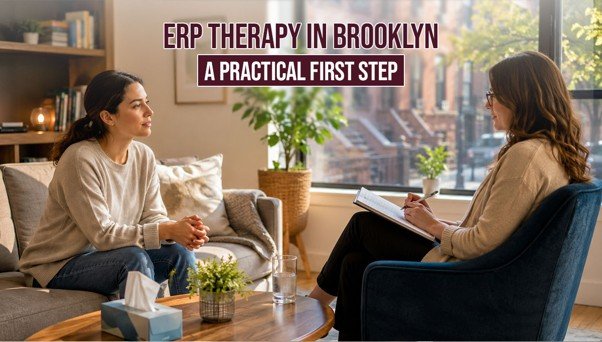
What if you could feel less afraid of your thoughts and take back control of your day? For people with OCD or anxiety, simple things can sometimes feel very hard. A thought may bring fear, and that fear may lead to repeated actions or avoiding certain places.
ERP therapy in Brooklyn can help you face these fears step by step. With the help of a trained therapist, you can learn that you can handle hard feelings without letting them control your life.
What Is ERP Therapy?
ERP stands for Exposure and Response Prevention. It is a type of therapy that can help people with OCD and some anxiety problems. In ERP, you slowly face things that make you feel worried or scared. At the same time, you learn not to do the actions you normally use to feel better.
For example, a person may feel afraid of germs and wash their hands many times. In ERP, they may slowly practice touching something they see as safe and wait before washing their hands. This can feel hard at first, but it helps the brain learn a new lesson: "I can feel worried, and I can still be okay."
The goal is not to make all fear disappear. The goal is to help you feel stronger when fear shows up. An ERP therapist in Brooklyn can guide you through this process in a safe and careful way.
How ERP Helps Break the OCD Cycle?
OCD can create a cycle that is hard to stop. First, an unwanted thought or fear appears. Then, you may feel worried and do something to make that feeling go away. This may be checking, washing, asking for help, or avoiding something.
The action may make you feel better for a short time. But the worry often comes back. This can make the cycle stronger.
ERP helps you break this cycle. Instead of always doing the action that makes you feel safe, you slowly learn to sit with the uncomfortable feeling. You learn that fear can rise and fall on its own.
These steps are planned with care. You do not have to face your biggest fear on the first day. A therapist can help you start with a step that feels possible and then move forward at your own pace.
Your First Steps with ERP Therapy in Brooklyn
Starting therapy can feel scary. This is especially true when you know that therapy may ask you to face things you usually avoid. A good therapist will not push you too fast. Instead, they will work with you and help you understand each step.
During ERP therapy in Brooklyn, your first sessions may focus on learning about your thoughts, fears, habits, and daily life. You may also talk about what you want to change.
Your therapist may help you:
Find the thoughts or situations that cause fear.
Notice the actions you take to feel safe.
Make a simple plan for facing fears step by step.
Practice staying calm when you feel uncomfortable.
Work toward things that are important to you.
ERP is not only about talking. It is also about learning new skills and using them in real life. With practice, you may become better at handling fear without letting it make your choices for you.
Choosing the Right ERP Therapist in Brooklyn
Finding the right therapist is an important step. You want someone who understands OCD and anxiety and knows how to use ERP. You should also feel safe and comfortable talking with them.
When looking for an ERP therapist in Brooklyn, you can ask:
Have you worked with people who have OCD?
Do you use ERP in your treatment?
How do you make exposure exercises fit each person?
What happens if I find an exercise too hard?
Can we talk about my goals and what matters to me?
A good therapist will listen to you. They will explain why you are doing each exercise. They will also help you understand that progress does not have to happen all at once.
Can ERP Be Combined with Other Therapeutic Approaches?
Yes. ERP can sometimes be used with other types of therapy. One example is Acceptance and Commitment Therapy, also called ACT.
ACT can teach you how to notice difficult thoughts without fighting them. It can also help you focus on the things that matter most to you.
Using ERP and ACT together can help you ask a new question. Instead of asking, "How can I stop feeling anxious?" you can ask, "What can I do even when I feel anxious?"
Is ERP Right for Everyone?
ERP can be helpful for many people with OCD and anxiety. However, every person is different. The best type of therapy depends on your needs, symptoms, goals, and life situation.
ERP should be done with care. Your therapist can help you choose the right starting point and decide how quickly to move forward.
If you have other mental health concerns or have been through difficult experiences, tell your therapist. This information can help them create a treatment plan that feels safe, helpful, and right for you.
Frequently Asked Questions
How long does ERP therapy take?
There is no set answer. Some people notice changes in a short time, while others need more support. It can depend on how strong your symptoms are, what your goals are, and how often you practice your skills. Your therapist can help you understand what may work best for you.
Is ERP therapy uncomfortable?
It can be. ERP asks you to face things that make you feel worried. But you do not have to face everything at once. A good therapist will help you take small steps. Over time, you can learn that you can handle uncomfortable feelings without needing to escape or use a compulsion.
How Do I Find an ERP Therapist in Brooklyn?
You can start by looking for a licensed therapist who has experience treating OCD and anxiety with ERP. You can ask about their training, their treatment style, and how they create exposure exercises.
You can also ask if they use other helpful approaches, such as ACT. It is important to find someone who understands your needs and makes you feel comfortable.
Remember, asking for help does not mean you are weak. It means you are ready to make a change. The right therapist can help you understand your fears and learn new ways to respond to them.
Does ERP make intrusive thoughts go away?
Not always. Everyone can have unwanted thoughts. ERP does not promise to remove every thought. Instead, it teaches you how to respond to these thoughts in a different way.
Can ERP help with avoidance as well as compulsions?
Yes. Avoiding something can make fear stronger over time. ERP can help you slowly face safe situations that you have been avoiding. You learn that you can handle the feelings that come with them.
Can I do ERP online?
Online ERP may be an option for some people. It depends on your needs and the therapist's services. A qualified therapist can help you decide if online therapy is a good choice for you.
Take a Practical First Step Toward More Freedom
You do not need to wait for every fear to disappear before you start living your life. ERP therapy in Brooklyn can help you learn to face difficult thoughts and feelings one small step at a time.
At New Material, we use an integrative approach that may combine ERP and ACT to support people with OCD and anxiety. We work with you, your goals, and your values. If you are ready to explore your options, we invite you to reach out to us and take your next step.
